
In this article
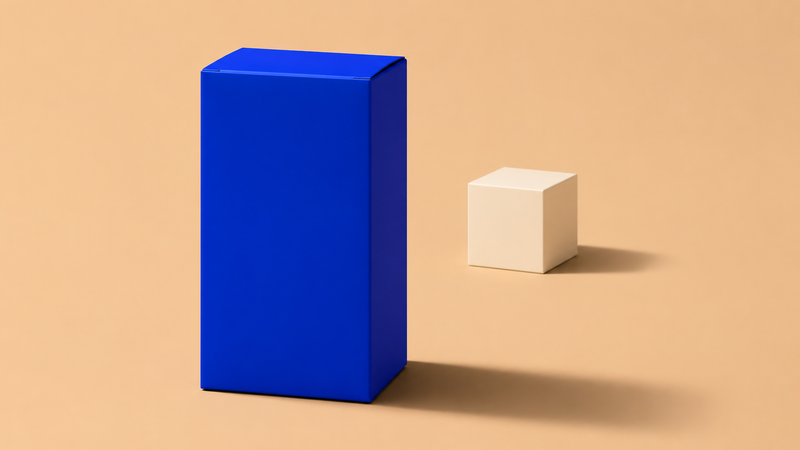
To match shadows in a product composite, place the object on the surface first, then use the background’s lighting cues to build its shadow. Check where the object touches the surface and where the shadow extends. A blue carton on a warm tabletop gives you a simple exercise you can repeat with your own images.
Place the product before adjusting its light
Imagine a fictional unmarked blue carton and a tabletop scene with a small ivory block already on it. Move the carton to the intended spot and check its base against the plane of the table. Compare its scale with the block. If the carton’s top or side looks as if it was photographed from a very different angle, try a source with a closer viewpoint.
Keep the cutout on a separate layer. If you still see a pale fringe, use Tong’s guide to checking transparent cutout edges before working on the shadow. A clean outline makes it easier to see the actual contact point.
Read the light already in the background
Look at the bright face of the ivory block and the shadow it casts. In the example, the light comes from upper left and the block’s shadow runs toward the lower right. Use that direction for the carton on the same surface. Compare the softness of the block’s shadow close to its base and farther away.
Choose a starting light direction before blending the product. If the source carton has a bright rim on the opposite side, decide whether a tonal adjustment can bring it into the scene or whether the source needs replacing.
Build contact and cast shadows separately
Place a small, tight shadow where the carton touches the table. Keep it close to the base and use the ivory block as a guide for density. Next create the longer shadow that extends away from the light. Shape it along the table and soften the farther edge according to the scene. Keep the layers separate so you can adjust them independently.
Toggle each layer and look at the product. If the carton still seems to float, check whether a bright gap separates its base from the contact shadow. If the longer shadow looks like a dark sticker, compare its outer edge and strength with the background cue.